




Your first meal with new dentures may take more thought than you expected. A familiar word might sound different, or your tongue may keep checking the edges of the appliance. Your mouth is learning to work around new surfaces, so everyday movements need practice.
That learning period also includes checking how the dentures fit and making adjustments when needed. Continue reading for a practical guide to the first days, the weeks that follow, and the habits that support comfort over time.
Your Adjustment Timeline
The stages below focus on removable dentures. Full dentures replace all the teeth in an upper or lower arch, while partial dentures replace some missing teeth. Your pace will depend on the design, your oral health, and whether you recently had teeth removed.
1. Start With Clear Instructions
The fitting visit should leave you knowing how to handle your dentures at home. Ask your dentist to demonstrate insertion and removal, then practice while help is available. A partial denture should follow the insertion path you are shown. Biting it into place can bend or damage its clasps, so tell the dentist if it feels difficult to seat.
Your wear schedule matters, too. Immediate dentures placed after extractions may need to stay in initially, including the first night, according to your dentist’s instructions. Follow your specific directions for removal, cleaning, and caring for the extraction sites.
Before leaving with new dentures in West Orange, NJ, confirm when to return and how to report a problem. Having those details written down can make the first evening feel more manageable.

2. Expect Some New Sensations
Getting used to dentures often includes a temporary feeling of fullness or bulk. You may also notice extra saliva while your mouth adapts to the appliance. Your cheeks and tongue play a role in controlling removable dentures. At first, you may become unusually aware of movements that used to happen without much thought.
If you are wearing dentures for the first time, allow yourself time to learn the routine. Even patients replacing an older set can need another adjustment period because the shape and fit have changed.
These sensations often settle over several weeks, but comfort should be discussed at follow-up visits. Repeated rubbing or persistent pain needs a dental review, even when you’re still adjusting to the appliance.
3. Keep Early Meals Simple
Eating during the first week is a chance to learn a different chewing technique. Start with soft foods cut into small pieces, following any additional instructions after extractions. Scrambled eggs, soft fish, cooked vegetables, and tender pasta can offer manageable options. Choose foods that let you practice without needing a strong bite or prolonged chewing.
Chew slowly and distribute food across both sides of your mouth. This can help reduce tipping compared with placing all the pressure on one side. Cut foods into bite-sized pieces instead of biting through them with your front teeth. That is especially helpful with full dentures, which may move when pressure pulls on the front.
Hard, sticky, or sharply edged foods can be challenging early on. Keep meals varied within the textures you can manage, and tell your dentist if discomfort prevents you from eating enough.
4. Give Speech Some Practice
Speaking may feel different while your tongue and lips adjust to the dentures. Certain sounds can take more effort, even when you know exactly what you want to say. Reading aloud provides a simple way to practice. Choose a short, familiar passage and repeat words that feel awkward, speaking at a comfortable pace.
A relaxed conversation with someone you trust can also help you settle into the experience. You don’t need to turn every interaction into a test or correct every small difference immediately. Speech often becomes more familiar with practice, although timing varies. If the denture repeatedly shifts or clicks as you talk, describe that to your dentist so its fit can be assessed.
5. Use Your Follow-Up Visits
A denture adjustment can address areas where the appliance places too much pressure. These visits are a normal part of care, and some patients need more than one. Describe where the discomfort occurs and when it starts. Knowing whether a spot hurts during chewing, after several hours, or immediately on insertion helps guide the examination.
Ask the practice whether you should wear the dentures before your appointment. The answer depends on your symptoms and treatment stage, so avoid forcing yourself through significant pain just to follow general advice. Contact your dentist about problems such as:
- Pain that worsens or prevents normal eating.
- A recurring sore, red patch, or raw area.
- Repeated slipping or clicking.
- Cracks, broken teeth, or damaged clasps.
If a sore area has not healed within two weeks, arrange an examination even if you suspect rubbing is the cause. You can call sooner for pain or other concerns; that timeframe isn’t a reason to postpone help.
Never file, bend, or glue the appliance yourself. Small changes can affect how it fits, and a professional assessment can identify the appropriate repair or adjustment.
6. Build a Cleaning Routine
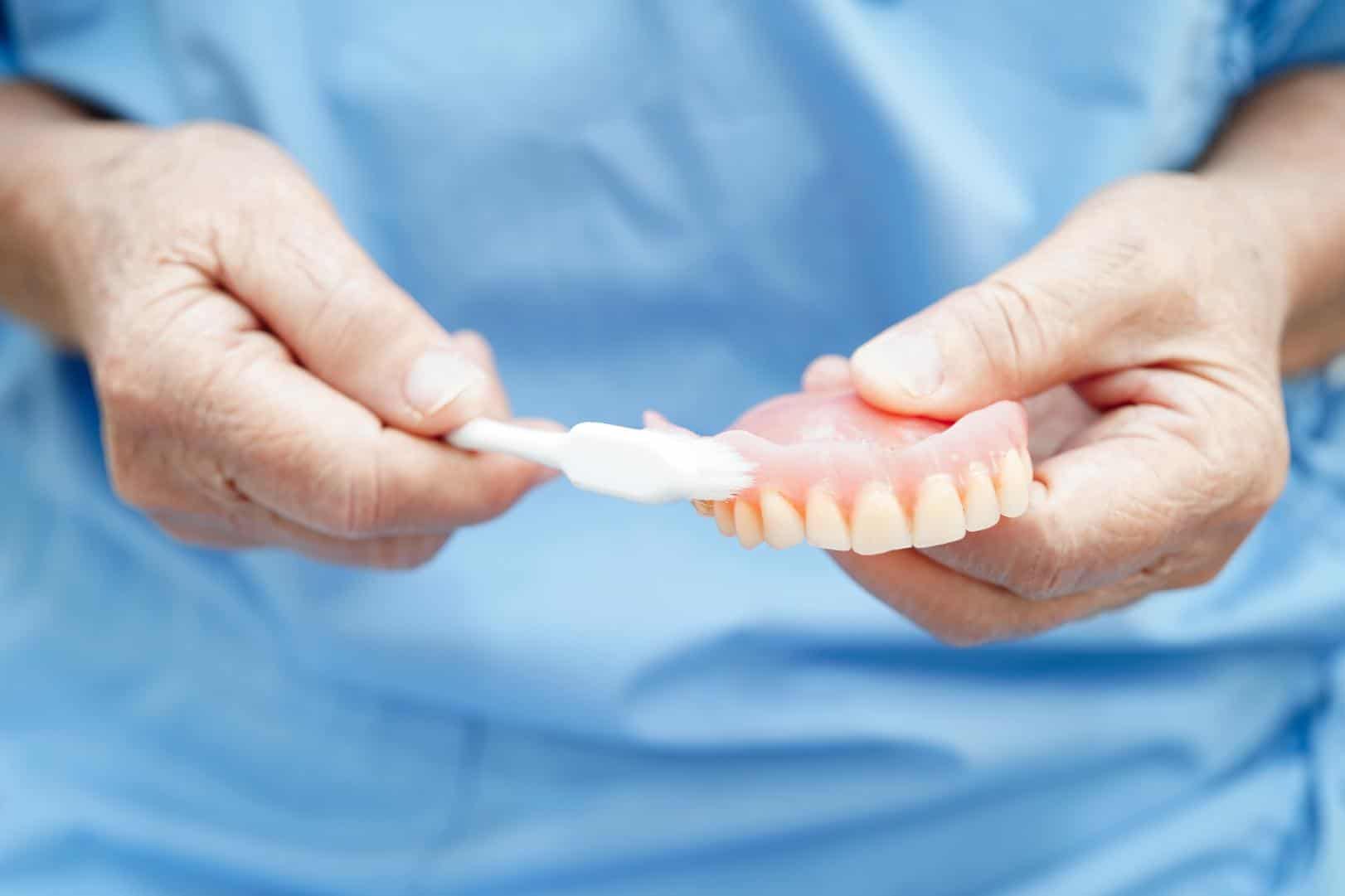
Daily denture care helps control food deposits and plaque on the appliance. It also protects the tissues that sit beneath it and any natural teeth that remain.
Once your dentist has explained the routine for your treatment stage, make cleaning part of a regular morning and evening habit. A few basics make handling easier:
- Clean over a folded towel or a basin of water to cushion a possible fall.
- Use a soft brush and a nonabrasive cleanser suitable for your denture material.
- Rinse thoroughly before putting dentures back in your mouth.
- Keep denture-cleaning solutions outside the mouth.
Ordinary toothpaste can scratch denture surfaces, and hot water can distort their shape. Products containing bleach may damage metal components, so check which cleaners are suitable for your appliance.
Clean your gums, tongue, and palate gently as instructed. Brush remaining natural teeth with fluoride toothpaste and clean between them, paying attention to teeth that help support a partial denture.
7. Give Your Gums Nighttime Rest
Once any initial wear instructions have ended, dentures are generally removed for sleep. This gives the tissues underneath a break and provides time to clean the appliance. Ask how to store your particular dentures overnight. Many need to stay moist in water or a suitable solution, but the material and product instructions determine the appropriate method.
A cleaning tablet’s soaking time may differ from the recommended overnight storage routine. Use each cleaning product for the recommended time, then follow the storage instructions for your dentures.
Keep the container in a consistent, safe place where it is unlikely to be knocked over. A predictable bedtime routine can make removal and storage easier to remember, especially while everything still feels new.
8. Expand Your Routine Gradually
During the next few weeks, you may become more comfortable with meals and conversation. Use those changes as feedback, while remembering that there is no universal day when adjustment is complete.
Try a wider range of food textures as comfort and your dentist’s instructions allow. Introducing one more challenging food at a time can make it easier to identify what still needs practice.
Food may also taste different when you first start wearing dentures. Take note of whether the issue is flavor, texture, or difficulty chewing, since those are useful distinctions to describe at follow-up. Keeping a brief record can help you explain the change without relying on memory.
You can also make everyday outings less complicated with a little preparation. Carry a denture case and any recommended cleaning supplies, and allow enough time to eat without rushing. Denture comfort involves more than tolerating the appliance. If you keep avoiding meals or conversations because something hurts or moves, share that with your dentist.
The goal is a routine you can use comfortably. Your experience outside the dental chair helps the practice understand whether further support is needed.
9. Watch for Changes in Fit
Denture fit can change as gums and underlying bone heal after extractions. An immediate denture may therefore need further attention even after you have learned to eat and speak with it.
A reline changes the surface that rests against the gums to improve its adaptation to your mouth. Depending on the situation, the dentist may recommend relining, another adjustment, or a replacement.
Adhesive can improve stability for some well-fitting full dentures when used appropriately. Ask whether it is suitable for your appliance, especially if you wear a partial denture.
Follow the recommended quantity and remove adhesive residue each day. Increasing the amount to compensate for a loose or painful denture can delay attention to the underlying fit problem.
Changes in stability deserve a review. They do not necessarily mean you have done something wrong or failed to adapt.
10. Keep Care Going
Regular dental visits remain important after the first few weeks, including for patients who no longer have natural teeth. The dentist still needs to examine the mouth, check the appliance, and look for changes in supporting tissues.
If you wear dentures in NJ, ask the practice to recommend an ongoing review schedule. The right interval depends on oral health, denture condition, and any concerns that develop. Mention persistent dry mouth, difficulty cleaning, or trouble removing the dentures. Your dentist can help adapt the care routine to your needs.
Dentures can become worn or damaged over time, so avoid assuming that a familiar appliance still fits well. Continuing professional care helps address changes before they become a bigger obstacle to daily use.
Find Your Comfortable Routine
Adjusting to dentures takes practice, and you should have guidance along the way. Changes in eating or speaking can improve with time, while discomfort and fit concerns deserve a closer look.
Book a visit with us here at Northfield Dental Group in West Orange, NJ, to discuss your new dentures, follow-up needs, or ongoing questions!
 Our Practice
 Our Doctors
 Blog
 Special Offers
 Financing
 Testimonials